Epoxy Floors
How Much Does Epoxy Garage Floor Installation Cost in Western Massachusetts?
Wondering what epoxy garage floor installation costs in Western MA? Get real price ranges, what drives costs up or down, and tips for hiring locally.
What Does Epoxy Garage Floor Installation Cost?
For most homeowners in Western Massachusetts, epoxy garage floor installation runs between $3 and $12 per square foot for professional installation. On a standard two-car garage of roughly 400 to 500 square feet, that puts the total project cost somewhere between $1,200 and $6,000, depending on the coating system and the condition of your existing slab.
That range is wide, and for good reason. A basic single-coat epoxy paint is a very different product from a full broadcast chip system with a polyaspartic topcoat. Understanding what drives cost helps you compare quotes accurately and avoid surprises.
What Factors Affect the Price?
Floor Condition and Prep Work
Surface preparation is the single biggest variable in any epoxy project. Concrete that is cracked, pitted, or contaminated with oil requires grinding, crack repair, and degreasing before any coating can bond properly. Skipping prep is the main reason DIY epoxy jobs peel within a year. Expect prep to account for 30 to 50 percent of a professional quote.
Coating System and Thickness
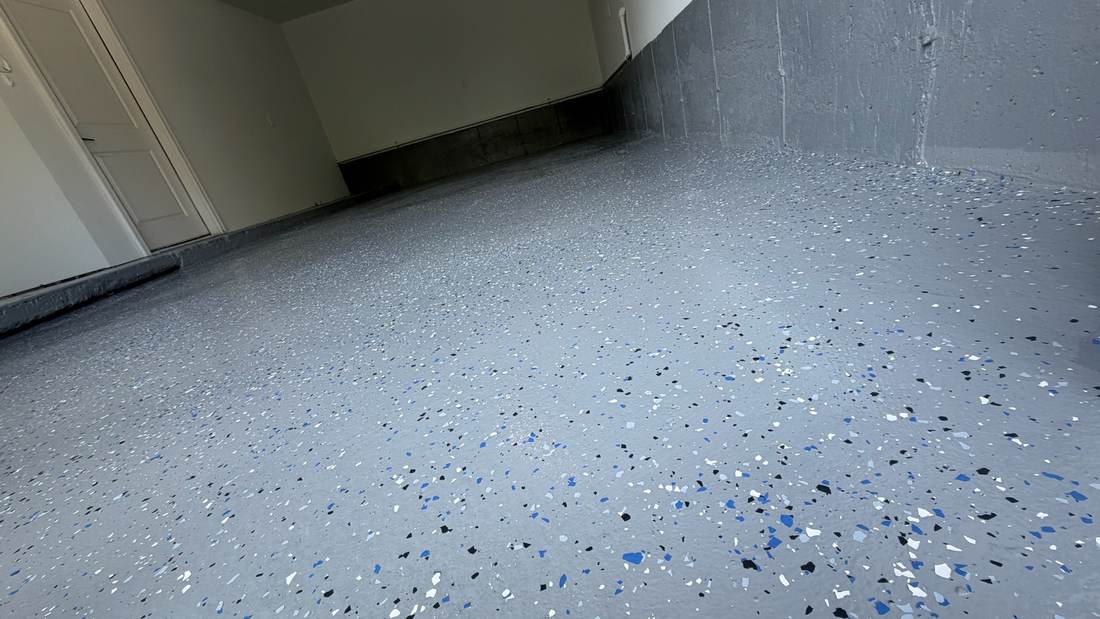
Entry-level epoxy paint is inexpensive but thin and less durable. Mid-range systems use a two-part epoxy base with a decorative color flake broadcast into the wet coating. Premium systems add a polyaspartic or polyurea topcoat that resists UV yellowing and chemical stains far better than standard epoxy alone. Each step up adds cost but also adds longevity.
New England Climate Considerations
Western Massachusetts winters are hard on garage slabs. Freeze-thaw cycles cause concrete to move slightly, and road salt tracked in from Route 91 commutes accelerates surface deterioration. A thicker, more flexible coating system holds up significantly better through Holyoke winters than a thin-film product. Spending a little more upfront on a quality system often saves money on repairs in three to five years.
Garage Size and Layout
One-car garages average 200 to 250 square feet; two-car garages run 400 to 500 square feet; three-car garages can exceed 700 square feet. Contractors price by the square foot, but very small jobs may carry a minimum charge. Unusual layouts with multiple drains, posts, or steps add labor time.
Typical Price Ranges by Coating Type
Here is a straightforward breakdown to help you budget:
- Single-coat epoxy paint: $1 to $3 per square foot (materials only, DIY). Often peels within 1 to 3 years on damp or unprepped slabs.
- Professional single-coat epoxy: $3 to $5 per square foot installed. Good for dry, well-prepped slabs in conditioned garages.
- Full chip broadcast system: $5 to $8 per square foot installed. The most popular option for homeowners in Agawam, Westfield, and Southampton.
- Polyaspartic or polyurea topcoat system: $8 to $12 per square foot installed. Fastest cure time, strongest UV and chemical resistance, longest expected lifespan.
These figures reflect typical Western Massachusetts market pricing. Your specific quote may vary based on contractor availability and material costs at the time of your project.
Would you rather we handled it? Estimates are always free.
Get a Free EstimateDIY vs. Professional Installation
Box-store epoxy kits cost $100 to $300 and are tempting for budget-conscious homeowners. The honest trade-off is this: professional installers use commercial-grade diamond grinders to open the concrete pores, which is the step most DIYers skip. Without it, even a quality product will delaminate. If your garage slab is in excellent condition, has no moisture issues, and you are comfortable with a multi-step application process, DIY can work. For most garages in the Pioneer Valley, where slabs see real winters, professional prep produces results that last.
For a complete overview of what the service includes, our epoxy floor coating service walks through the process step by step.
How to Get an Accurate Quote
When you contact a local contractor, have these details ready: the square footage of your garage, any known cracks or stains, whether the slab has been previously coated, and when the garage was built. Garages in homes built before 1978 may have legacy floor sealers that affect adhesion. the EPA provides guidance on older building materials that contractors should test for before grinding.
Get at least two written quotes that specify the coating brand, number of coats, prep method, and warranty. A quote that does not itemize prep separately is worth clarifying before you sign anything. Our team recommends asking specifically whether the price includes crack repair and moisture testing, since those are common add-ons.
Frequently Asked Questions
How long does an epoxy garage floor last?
A professionally installed epoxy system typically lasts 5 to 10 years with normal use, and premium polyaspartic systems can last 15 years or more. Longevity depends heavily on surface prep quality and how much vehicle traffic and road salt the floor sees each winter.
Does cold weather affect epoxy installation?
Yes. Most epoxy coatings require concrete surface temperatures above 50 degrees Fahrenheit to cure properly. In Western Massachusetts, this generally limits installation to late spring through early fall, though heated garages can extend that window.
Is epoxy slippery when wet?
A smooth epoxy finish can be slippery when wet, which is why most professional systems include a broadcast of anti-slip aggregate or texture flakes in the topcoat. Ask your contractor specifically about slip resistance if this is a concern.
Do I need to move my car out for several days?
Standard epoxy systems require 24 hours before foot traffic and 72 hours before vehicle traffic. Polyaspartic systems cure much faster, sometimes allowing vehicle use within 24 hours. Confirm the cure schedule with your installer before booking.
What is the difference between epoxy and polyurea coatings?
Epoxy is a two-part resin that bonds tightly to concrete and provides a hard, durable surface. Polyurea and polyaspartic coatings are more flexible, cure faster, and resist UV yellowing better than standard epoxy. Many professional systems combine both: an epoxy base coat for adhesion and a polyaspartic topcoat for durability.
They Also Read
Epoxy vs. Painted Concrete Garage Floors: Which Is Better?
Choosing between epoxy and painted concrete for your garage floor? Learn the real differences in durability,...
Read more →
Epoxy Garage Floors: Are They Worth It for New England Homes?
Thinking about epoxy for your garage floor? Learn how New England winters, salt, and moisture affect...
Read more →Ready for a free estimate?
Tell us about your project and we will get you a straight answer on price and timing.