Epoxy Floors
Epoxy vs. Painted Concrete Garage Floors: Which Is Better?
Choosing between epoxy and painted concrete for your garage floor? Learn the real differences in durability, cost, and maintenance for Western MA homeowners.
The Difference Between Epoxy and Paint Is Bigger Than You Think
Walk into any home improvement store and you will find products labeled 'epoxy floor paint.' That name is misleading. True epoxy is a two-part system — a resin and a hardener — that chemically bonds to concrete and cures into a hard, semi-rigid coating. Latex or oil-based concrete paint, on the other hand, simply dries on top of the surface like wall paint. That difference in chemistry drives nearly every performance gap between the two options. Understanding it helps you make a smarter decision for your garage.
For homeowners in Westfield, Agawam, Springfield, and the surrounding area, the choice is not just about looks. Western Massachusetts winters bring road salt, freeze-thaw cycles, and heavy moisture — all of which push garage floors hard from October through March. What you put on that floor needs to survive real New England conditions.
Durability and Longevity: How Each Coating Holds Up
This is where the two options separate most clearly. A professionally applied epoxy system typically lasts 10 to 20 years before it needs significant attention, depending on traffic and maintenance. Concrete paint, even the best formulations, generally needs to be recoated every two to five years under normal garage use.
Resistance to Abrasion and Impact
Epoxy cures to a surface that is far harder than dried paint. It resists tire marks, dropped tools, and dragged equipment without chipping or flaking. Concrete paint scratches more easily and can peel at high-stress points like the tire tracks near the door. If you park a vehicle or store heavy equipment, that difference matters every single day.
Moisture and Chemical Resistance
Garages in West Springfield and Holyoke see plenty of road salt tracked in on tires from November through April. Epoxy resists salt, oil, gasoline, and most household chemicals without staining or degrading. Concrete paint offers only basic protection and is vulnerable to prolonged exposure to automotive fluids. the National Association of Home Builders notes that proper surface coatings can significantly extend the usable life of concrete slabs in residential settings.
Surface Preparation: The Step That Decides Everything
Neither coating performs well on a poorly prepared surface, but epoxy is far less forgiving. Before epoxy goes down, the concrete must be mechanically ground or acid-etched to open its pores and allow proper bonding. Any moisture coming up through the slab — common in older homes in Southampton and the Pioneer Valley — must be addressed first or the coating will delaminate within months.
Testing for Moisture Before You Commit
A simple test: tape a square of plastic sheeting to the bare floor, seal the edges, and leave it for 24 hours. If moisture collects underneath, you have a vapor transmission issue that needs to be resolved before any coating goes down. This step is often skipped with paint because the consequences show up more slowly — but they do show up, usually as bubbling or widespread peeling.
Concrete Paint Is More Forgiving to Apply
Concrete paint requires cleaning and etching, but the margin for error is wider. A homeowner comfortable with a roller and a weekend afternoon can apply it themselves with reasonable results. Epoxy application has a shorter working window and is more sensitive to temperature — most manufacturers specify that the concrete surface should be between 55 and 90 degrees Fahrenheit, which means timing matters in a Massachusetts spring or fall.
Would you rather we handled it? Estimates are always free.
Get a Free EstimateCost Comparison: Upfront Price vs. Long-Term Value
Concrete paint wins on upfront cost. A DIY paint job for a two-car garage in the Springfield area might run $100 to $300 in materials. A professional epoxy system — with proper prep, a base coat, decorative flakes if desired, and a topcoat — typically ranges from $1,500 to $3,500 for the same space, depending on the condition of the concrete and the specific system used.
The long-term math tells a different story. If you repaint every three years for 15 years, you have applied the coating five times. Add materials, your time, and the wear your floor endures between recoats, and the gap narrows considerably. A single quality epoxy installation, properly maintained, can outlast multiple paint cycles without reapplication. For homeowners who plan to stay in their home and want a floor that simply works without annual attention, the higher upfront investment in epoxy often makes sense.
Appearance and Customization Options
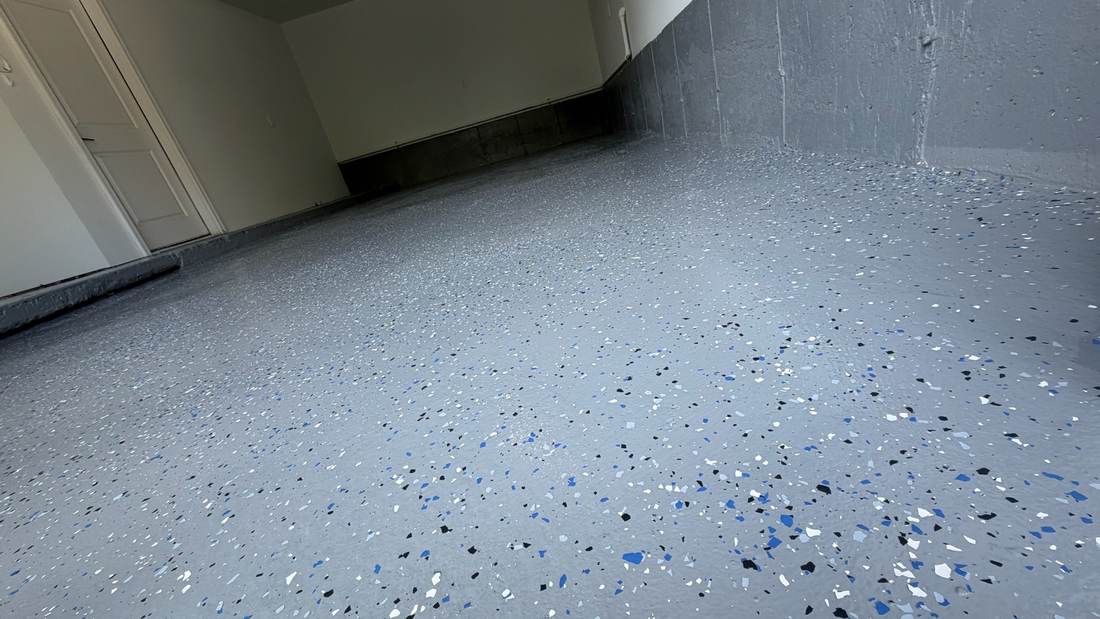
Both options improve on bare concrete, but epoxy offers significantly more variety. Broadcast flake systems — where colored vinyl flakes are scattered into the wet coating — create a textured, slip-resistant surface that hides minor imperfections and looks sharp in a finished garage or workshop. Metallic epoxy creates a polished, reflective look that some homeowners prefer for a showroom-style space.
Concrete paint is available in many colors but has limited texture options. Gloss paint can actually become slippery when wet, which is a real concern in a garage where you may be stepping out of a wet car. If you choose paint, look for formulas specifically designed for garage floors that include a grit additive for traction. For a full overview of coating options for your space, our epoxy floor coating service is a useful starting point.
Which Option Is Right for Your Garage?
Choose concrete paint if you are working with a tight budget right now, plan to sell the home within a few years, or simply want a cleaner-looking floor without committing to a multi-day professional project. It is a legitimate solution for garages that see light use.
Choose epoxy if you want a long-lasting, low-maintenance surface that can handle a real New England winter, regular vehicle traffic, and the kind of wear a working garage produces. Professional installation removes the prep and application variables that cause most DIY epoxy failures. If your concrete has cracks, staining, or moisture history, a professional assessment before installation is especially important. Some epoxy topcoats carry low-VOC formulations — the EPA provides guidance on VOC standards for architectural coatings, which is worth understanding if you are sensitive to fumes during application.
The right answer depends on your budget, your timeline, and how you actually use your garage. For most homeowners who want a durable, finished floor they will not have to think about for years, epoxy is the stronger investment — but only when it is installed correctly on a properly prepared surface.
Frequently Asked Questions
Can I apply epoxy over existing painted concrete?
In most cases, no — and attempting it is one of the most common reasons epoxy fails. The existing paint must be fully removed so the epoxy can bond directly to the concrete. A professional can assess whether your current surface is a candidate for an overlay or whether full removal is necessary.
How long does a garage have to be off-limits after epoxy is applied?
Most epoxy systems require 24 hours before foot traffic and at least 72 hours before you drive a vehicle onto the surface. Full cure, meaning the point at which the coating reaches its maximum hardness, typically takes five to seven days. Rushing this timeline causes damage that cannot easily be repaired.
Is epoxy slippery when wet?
A plain gloss epoxy topcoat can be slippery when wet, but most professional installations include an anti-slip additive or a broadcast flake layer that significantly improves traction. If slip resistance is a concern, ask your installer specifically about the topcoat they plan to use.
Does cold weather affect epoxy floors after they are cured?
Once fully cured, epoxy handles cold temperatures well and does not become brittle under normal garage conditions. The risk is during application — epoxy should not be applied when concrete temperatures are below about 55 degrees Fahrenheit, which is why fall and spring installations in Western Massachusetts need careful scheduling.
How do I maintain an epoxy garage floor?
Routine maintenance is straightforward: sweep regularly and mop with a mild, pH-neutral cleaner as needed. Avoid harsh solvents or abrasive scrubbers. Clean up oil or chemical spills promptly, and place protective pads under heavy equipment stands or car jacks to prevent point-load gouging.
They Also Read
How Much Does Epoxy Garage Floor Installation Cost in Western Massachusetts?
Wondering what epoxy garage floor installation costs in Western MA? Get real price ranges, what drives costs...
Read more →
Epoxy Garage Floors: Are They Worth It for New England Homes?
Thinking about epoxy for your garage floor? Learn how New England winters, salt, and moisture affect...
Read more →Ready for a free estimate?
Tell us about your project and we will get you a straight answer on price and timing.