Epoxy Floors
Epoxy Garage Floors: Are They Worth It for New England Homes?
Thinking about epoxy for your garage floor? Learn how New England winters, salt, and moisture affect performance — and whether the investment pays off in Western MA.
Why Garage Floors Take a Beating in New England
If you park a car in a Western Massachusetts garage between November and April, your floor is fighting a losing battle every single day. Salt and sand tracked in from routes around Springfield and Agawam, repeated freeze-thaw cycles, and moisture from melting snow all work together to pit, crack, and stain bare concrete. By spring, many homeowners in the region are left with a floor that looks like a decade of neglect happened overnight.
This is the exact environment where a quality floor coating earns its keep — or fails spectacularly if the wrong product is applied. Before you decide, it helps to understand what the coating is actually doing and what the local climate demands of it.
What Epoxy Actually Does for Your Concrete
Epoxy is a two-part system: a resin and a hardener that chemically bond when mixed and applied to prepared concrete. The result is a hard, dense surface that resists oil, road salt, and most household chemicals. It also makes the floor easier to sweep and mop, which matters when you are dealing with the grit and grime that follows every Western Massachusetts winter storm.
The Moisture Problem Specific to New England Garages
Here is the detail most sales pitches skip: epoxy bonds to concrete, but concrete breathes. In climates like ours — with significant snowmelt in towns like Westfield and Southampton — moisture vapor can push up through a slab from below. If the concrete is not properly prepared and tested before coating, that vapor pressure can cause the epoxy to bubble, peel, or delaminate within a season or two. This is the number-one reason DIY kits from big-box stores fail here. Professional installation includes moisture testing and surface profiling, usually by diamond grinding, that creates the mechanical bond needed to survive our conditions.
Temperature and Application Windows
Epoxy is temperature-sensitive during installation. It should generally be applied when both the air and the slab surface are above 50 degrees Fahrenheit and humidity is controlled. In Western Massachusetts, that realistically limits installation to late spring through early fall — roughly May through September — for best results. Pushing that window risks poor adhesion and an uneven cure.
The Real Costs: What to Budget in Western Massachusetts
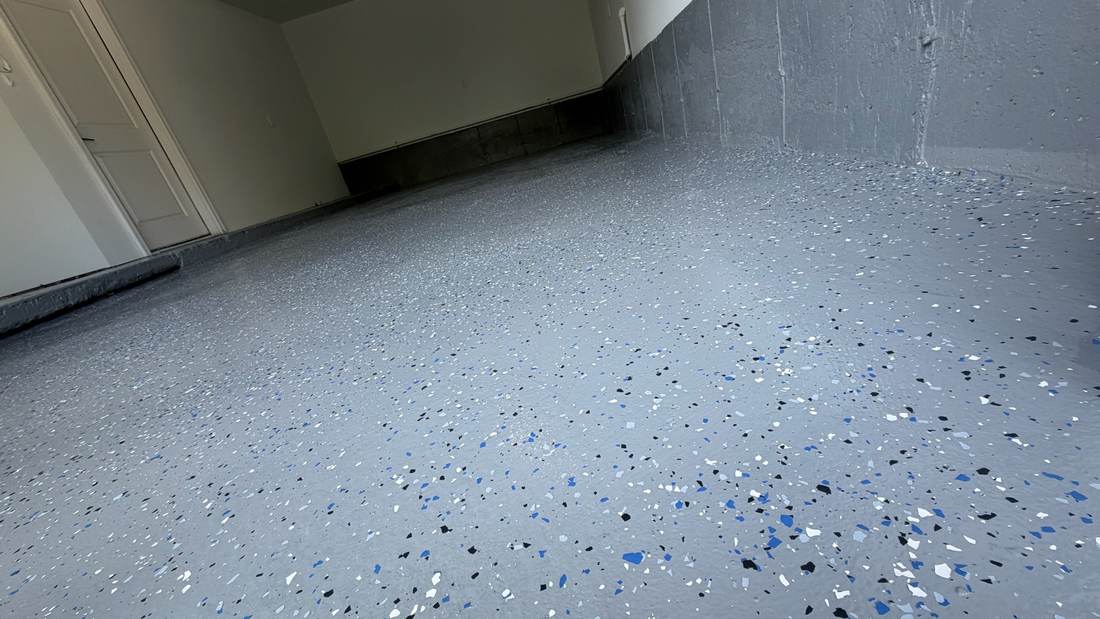
For a standard two-car garage, professionally installed epoxy typically runs between $3 and $7 per square foot for materials and labor, depending on the system chosen and the condition of the existing slab. A two-car garage averaging around 400 square feet can cost anywhere from $1,200 to $2,800 or more. Flake or quartz broadcast systems, which add texture and hide imperfections well, sit toward the higher end. Single-color solid coatings cost less but show every surface flaw.
If your slab has significant cracks or spalling — common in older homes in Holyoke and West Springfield where garages date back several decades — crack repair and surface preparation can add to that estimate. Do not skip this step trying to save money. A coating over a damaged slab will fail faster than the original concrete.
For a complete look at what is involved, our epoxy floor coating service gives you a clear breakdown of the process and what to expect from a professional installation.
Would you rather we handled it? Estimates are always free.
Get a Free EstimateHow Epoxy Holds Up Against New England Winters Long-Term
A professionally installed, high-solids epoxy or polyaspartic system applied over properly prepared concrete can realistically last 10 to 20 years in a residential garage with normal care. Polyaspartic topcoats — often used as a finish layer over an epoxy base — are more UV-stable and cure faster, making them a popular choice for homeowners who cannot wait days for a traditional epoxy to fully harden.
Salt Resistance: The Deciding Factor
Road salt is corrosive to bare concrete but largely slides off a properly cured epoxy surface. This is one of the clearest wins for coated floors in our region. Vehicles coming in from salted roads in and around Springfield deposit brine on the floor with every winter trip. On bare concrete, that salt works into the pores and accelerates deterioration. On a sealed epoxy surface, it stays on top and wipes away.
What Maintenance Actually Looks Like
Routine maintenance is simple: sweep debris regularly and mop with a pH-neutral cleaner a few times a year. Avoid dragging sharp or heavy metal objects across the surface, and place felt pads under motorcycle kickstands and tool storage units. One thing worth watching is hot tire pickup — a phenomenon where plasticizers in warm tires can temporarily bond to certain epoxy formulations and pull small sections of the coating when the vehicle moves. Quality topcoats significantly reduce this risk, which is another reason the cheapest option is rarely the best one here.
Is the Investment Worth It? An Honest Assessment
For most homeowners in Western Massachusetts who use their garage regularly and want a cleaner, more durable space, yes — a professionally installed coating delivers a strong return. You are protecting the concrete slab itself, which is far more expensive to replace than to coat. You are reducing the time spent cleaning. And you are adding a finished look that holds up to the specific punishment New England winters deliver year after year.
Where it may not be worth it: if your slab has major structural damage, if you plan to sell the home within a year or two and the garage is not a selling point, or if the garage is unheated and sees extreme temperature swings that could stress the coating. In those cases, a simpler concrete sealer might be the more practical short-term answer.
the National Association of Home Builders notes that garage improvements, including floor finishing, are among the projects that consistently add perceived value to a home at resale — a useful data point if you are on the fence.
Frequently Asked Questions
How long does epoxy garage floor coating last in New England?
A professionally installed system typically lasts 10 to 20 years with proper maintenance. Harsh winters and road salt do accelerate wear on lower-quality coatings, so investing in a high-solids epoxy or polyaspartic topcoat is especially important in this region. Regular sweeping and occasional mopping are all the upkeep most floors need.
Can epoxy be applied in the winter in Western Massachusetts?
Generally, no — not safely. Epoxy requires both the air temperature and the concrete slab to be above roughly 50 degrees Fahrenheit during application and cure. In most Western MA garages, that rules out installation from October through April unless the space is climate-controlled. Scheduling a spring installation gives you the best chance of a long-lasting result.
Why did my previous epoxy coating peel after one winter?
Peeling almost always comes down to inadequate surface preparation or a moisture problem in the slab. Big-box store kits rely on acid etching, which does not open the concrete surface as effectively as diamond grinding. Moisture vapor pushing up through the slab can also break the bond. A professional installation addresses both issues before the first drop of coating goes down.
How much does epoxy garage floor installation cost near Springfield or Westfield?
Most homeowners in the area pay between $1,200 and $2,800 for a two-car garage, depending on the system chosen and the condition of the slab. Crack repair, heavy surface grinding, or decorative flake systems can move the number higher. Getting a specific quote based on your slab size and condition is the most reliable way to budget.
Is epoxy slippery when wet?
A smooth, sealed epoxy surface can be slippery when wet, but most professional systems add a non-slip aggregate — typically aluminum oxide or a decorative quartz broadcast — to the topcoat. This gives the floor texture and meaningful traction even when snow and slush are tracked in, which is a practical necessity for any New England garage.
They Also Read
How Much Does Epoxy Garage Floor Installation Cost in Western Massachusetts?
Wondering what epoxy garage floor installation costs in Western MA? Get real price ranges, what drives costs...
Read more →
Epoxy vs. Painted Concrete Garage Floors: Which Is Better?
Choosing between epoxy and painted concrete for your garage floor? Learn the real differences in durability,...
Read more →Ready for a free estimate?
Tell us about your project and we will get you a straight answer on price and timing.