Pressure Washing
Power Washing Before Summer Entertaining: Deck, Patio & Siding
Get your deck, patio, and siding ready for summer entertaining with power washing tips built for Western MA homeowners and New England weather.
Why Spring Cleaning Means More Than Sweeping the Deck
After a Western Massachusetts winter, outdoor surfaces take a beating. Freeze-thaw cycles work moisture into wood grain and concrete, while months of wet leaves deposit mold, mildew, and tannin stains on anything left outside. By the time Memorial Day rolls around, your deck boards, patio pavers, and siding can look years older than they are. A thorough cleaning before summer entertaining does not just improve curb appeal — it removes organic growth that continues to break down surfaces if left untreated. Starting early in the season gives wood time to dry fully before you apply any sealant or stain, which matters more than most homeowners realize.
Cleaning Your Deck: What to Know Before You Start
Wood decks require more care than concrete or vinyl because the wrong pressure setting or the wrong nozzle can raise the grain, splinter soft wood fibers, or drive water deep into the boards. A wide-angle tip — typically 40 degrees — and a working distance of at least twelve inches is the right starting point for most softwood decks. Hardwood decking like ipe or mahogany can tolerate slightly more pressure, but slower passes and lower PSI are still safer than aggressive technique.
Pre-Treat Stubborn Mildew First
If you see black or green patches, apply a deck cleaner or an oxygen-bleach solution and let it dwell for ten to fifteen minutes before washing. Skipping this step and relying on water pressure alone tends to spread spores rather than remove them. Rinse thoroughly so no cleaner residue soaks into the wood. the EPA provides guidance on biocide products, which is worth reviewing if you plan to use anything stronger than oxygen bleach near a garden or waterway.
Let the Wood Dry Before Sealing
This is the step homeowners most often rush. Wood needs at least 48 to 72 hours of dry weather before a sealant or penetrating oil will bond properly. In the Connecticut River Valley, late May and early June can still bring stretches of rain, so check a multi-day forecast and plan accordingly. Sealing damp wood traps moisture inside, which leads to peeling and graying within a single season.
Patio and Hardscape: More Forgiving, But Not Maintenance-Free
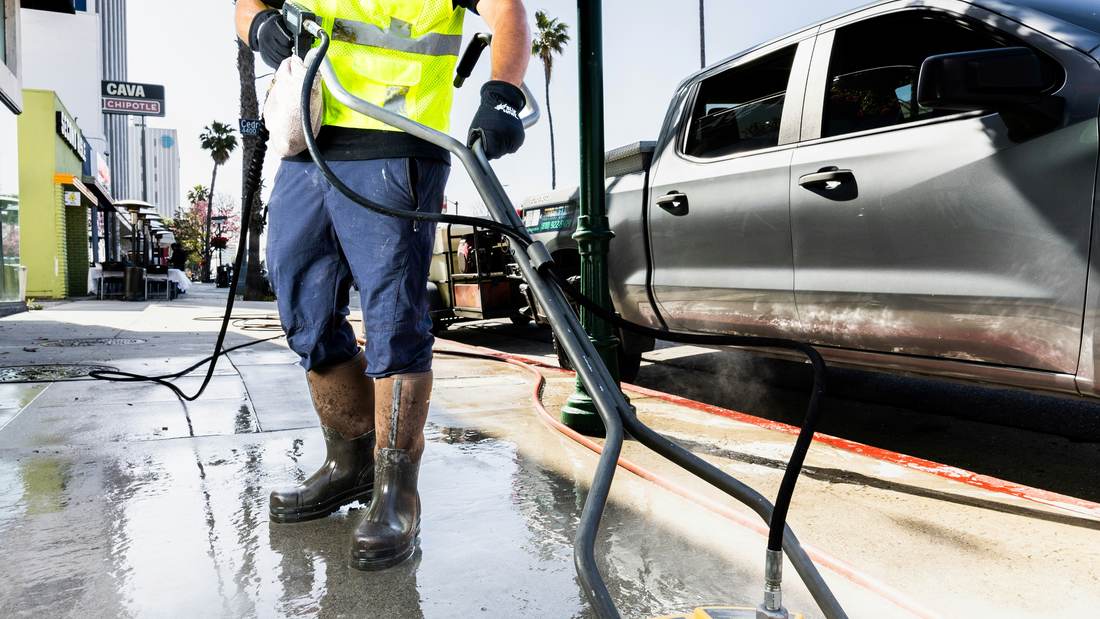
Concrete, brick, and natural stone tolerate higher pressure than wood, but that does not mean anything goes. Older mortar joints in brick patios can erode if you hold the wand too close. Porous concrete and bluestone absorb stains from leaves and iron in your water supply, and those stains are easier to remove with a surface cleaner attachment than with a single wand pass. A surface cleaner spins two small nozzles in a circular pattern, eliminating the streaks that a standard wand leaves on flat surfaces.
After cleaning, consider applying a concrete or paver sealer. Sealing closes the pores that allow oil, grease, and tannins to penetrate, which means your patio stays cleaner through the entire cookout season. Many homeowners in Agawam and Southampton skip this step and wonder why their patio looks dingy again by August.
Siding: Protecting Your Home's Exterior
Vinyl siding is the most forgiving surface to clean — low pressure, a wide-angle tip, and a mild detergent are usually all you need. The key is to work from the top down and rinse each section before the soap dries, particularly on warm, sunny days when the siding heats up quickly. Avoid spraying upward at an angle because water forced behind the panels can saturate the housewrap underneath.
Painted wood or fiber-cement siding needs more caution. Excessive pressure can chip paint, force water into joints, and accelerate the very deterioration you are trying to prevent. If the paint on your wood siding is already peeling or checked, cleaning it aggressively will strip more paint than the surface can afford to lose. In that case, a low-pressure rinse and a fresh coat of paint may be the smarter sequence. For homes built before 1978, the EPA sets clear rules for disturbing lead paint during any cleaning or prep work — review those guidelines before you start.
Would you rather we handled it? Estimates are always free.
Get a Free EstimateWhen to Hire a Pro Instead of Renting Equipment
Renting a pressure washer makes sense for a small, flat patio or a section of vinyl fence. It becomes less practical when you are working two stories up on a ladder, cleaning cedar shake that damages easily, or treating an older home where the right pressure settings genuinely matter. Equipment rental fees, nozzle sets, detergent, and a lost afternoon add up faster than most homeowners budget for. For a multi-surface job — deck, patio, and siding in a single visit — our pressure washing service is often the more efficient choice, and the results are more consistent because the right equipment is matched to each surface.
Professional crews also carry liability coverage that protects you if a window seal is damaged or a board is split by too much pressure. That coverage is not something a weekend rental provides.
Frequently Asked Questions
How long before a summer party should I schedule power washing?
Plan for at least one week before your event. That window gives wood surfaces 48 to 72 hours to dry, leaves time to apply a sealant if needed, and provides a buffer if rain delays the project. Booking a professional even earlier in May gives you the most flexibility with the schedule.
Can I power wash my deck and then stain it the same weekend?
Only if the weather cooperates perfectly and the wood is a dense hardwood that dries quickly. For most softwood decks in New England, a single weekend is not enough time. Stain applied to damp wood peels within months, wasting both the product and the labor.
Is power washing safe for all types of siding?
Vinyl and fiber-cement siding handle low-to-moderate pressure well. Wood clapboard and cedar shake need gentle technique and lower PSI settings. Stucco and older brick should be cleaned with very low pressure or soft-washing methods to avoid damaging the surface or the mortar.
Will power washing remove paint from my siding?
It should not if the paint is in good condition and you use the correct pressure. Loose, peeling, or chalking paint may come off because it has already lost adhesion — in that case the surface needed repainting anyway. Use a wide-angle tip and keep a safe distance from the surface.
Do I need to seal or stain after every cleaning?
Not necessarily every year, but you should test the wood by sprinkling water on the surface. If the water beads up, the existing sealer is still working. If it soaks in within a few seconds, the wood is ready to absorb a fresh application of sealant or stain.
They Also Read
How Much Does Pressure Washing Cost in Springfield & Holyoke, MA?
Wondering what pressure washing costs in Springfield or Holyoke, MA? Get local price ranges, what affects your...
Read more →
Pressure Washing vs. Soft Washing: Which Is Right for Your Siding?
Not sure whether to pressure wash or soft wash your siding? Learn which method protects your home and delivers...
Read more →Ready for a free estimate?
Tell us about your project and we will get you a straight answer on price and timing.