Interior Painting
Do You Need a Primer Before Painting? A Homeowner's Guide
Not sure if you need primer before painting? Learn when to skip it, when it's essential, and how Western MA's climate affects your choice.
What Primer Actually Does
Primer is a preparatory coating applied before paint, and its job is different from paint's job. Paint adds color and a protective film. Primer bonds to the surface beneath it and creates a stable foundation for the paint to grip. Without that foundation, paint can peel, blister, or look uneven within a season or two — sometimes sooner in homes that see the kind of temperature swings common across Western Massachusetts, where a January freeze can follow a fall heat wave with little warning.
Most interior primers are either latex (water-based) or oil-based. Latex primers dry faster, clean up with water, and work well for most drywall and wood surfaces. Oil-based primers penetrate deeper and are better at blocking stains and sealing porous materials. Shellac-based primers are the heavy hitters — excellent at blocking smoke, water stains, and odors, though they require denatured alcohol for cleanup.
When You Absolutely Need Primer
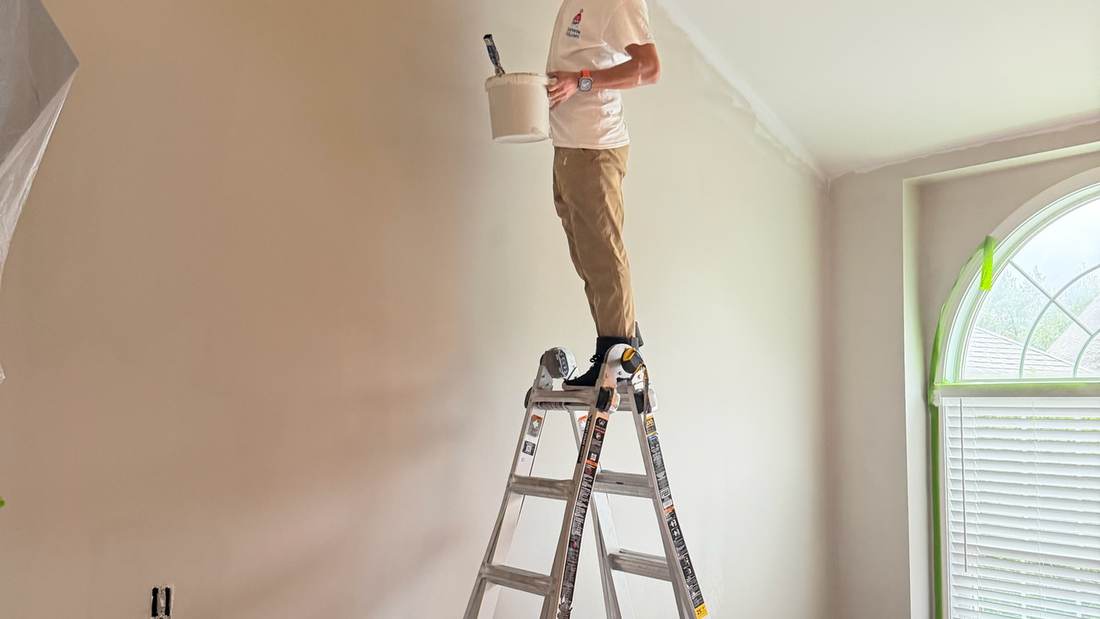
There are situations where skipping primer is simply not an option if you want results that last. Knowing these scenarios will save you from redoing the work in a year.
New Drywall
Fresh drywall — including any patched areas — is thirsty. The paper facing and joint compound absorb paint unevenly, leaving a blotchy finish called flashing. A coat of drywall primer (also called a PVA primer) seals the surface so your finish coat spreads evenly and looks consistent. This step is non-negotiable for new construction or after significant drywall repairs.
Drastic Color Changes
Going from a deep burgundy to a soft white, or from a bright yellow to a cool gray? Primer tinted to a midtone between your old and new colors dramatically reduces the number of finish coats you need. Without it, the old color can ghost through even after two or three coats of expensive paint. Ask your paint supplier to tint the primer toward your finish color — it is a small cost that pays off quickly.
Stains and Problem Areas
Water stains, smoke damage, crayon marks, and grease are notorious for bleeding through paint no matter how many coats you apply. A stain-blocking primer — shellac-based for the toughest jobs, water-based for lighter issues — locks those problems in place before you ever open a can of finish paint. Homes in the Springfield and Holyoke area that have dealt with basement moisture or older heating systems often benefit from this step in lower-level rooms.
Switching Paint Types or Going Over Glossy Surfaces
If the existing wall has a high-gloss or semi-gloss finish, new paint struggles to adhere. Lightly sanding and then priming gives the surface enough tooth for the new coat to bond. Similarly, if you are switching from oil-based paint to latex (or vice versa), primer is the compatibility layer that prevents peeling.
Raw Wood and Bare Surfaces
Any unfinished wood — trim, doors, new woodwork — needs primer before paint. Raw wood is porous and contains natural tannins that can bleed through and yellow a finish coat. Primer seals those tannins and gives you a smooth, consistent base.
Would you rather we handled it? Estimates are always free.
Get a Free EstimateWhen You Can Reasonably Skip Primer
Primer is not always required, and knowing when to skip it keeps your project budget and timeline realistic.
If you are repainting a wall that is already in good condition — same sheen level, similar color, no stains, and a sound existing coat — a high-quality self-priming paint-and-primer in one product can do the job. These products contain more solids than standard paint and perform well on surfaces that are already sealed and stable. They are not a substitute for a dedicated primer coat on new or problem surfaces, but for a straightforward refresh they are a legitimate shortcut.
You can also skip a separate primer step if you are using a very similar color and the current surface is clean and properly bonded. A good prep job — washing the walls, patching any holes, lightly sanding glossy spots — matters more in this scenario than whether you add a primer coat.
New England Climate and How It Affects Your Decision
Western Massachusetts homeowners face conditions that make surface prep more important than in milder climates. Humidity in summer can reach levels that slow drying times and affect adhesion. In fall and winter, forced-air heating systems dry out interior air, which can cause wood trim to expand and contract noticeably. These seasonal stresses put real pressure on paint bonds, and a properly primed surface holds up far better under that kind of movement.
If you are painting in a bathroom, laundry room, or any space with regular moisture exposure, a moisture-resistant primer before your finish coat is worth the extra step. This applies in older homes in neighborhoods like Agawam and West Springfield, where bathrooms may not have been renovated in decades and the substrate could be plaster rather than drywall — a surface that responds even better to primer than modern drywall does.
For homes built before 1978, there is an additional consideration: existing paint may contain lead. the EPA sets the rules for disturbing lead paint during renovation, and any sanding or stripping should be done following those guidelines before any new primer or paint goes on.
Choosing the Right Primer for Your Project
Walk into any paint store in the region and you will find a wall of primer options. Here is a simple way to narrow it down:
- New drywall or patched areas: PVA drywall primer
- Raw or bare wood: latex wood primer or oil-based wood primer for resinous species like pine
- Stains, smoke, or water damage: shellac-based stain blocker
- Glossy surfaces before repainting: bonding primer
- Moisture-prone rooms: moisture-resistant latex primer
- General repaints in good condition: paint-and-primer in one is often enough
Benjamin Moore provides detailed product guidance on when dedicated primer is recommended versus a self-priming formula, which is useful when you are comparing options at the store.
If you are unsure about the right product for your specific surface, our interior painting service is a good starting point for getting a professional assessment before you buy anything.
Frequently Asked Questions
Can I use paint-and-primer in one instead of a separate primer?
Paint-and-primer in one works well for repainting surfaces that are already in good condition with a similar color. It is not a true substitute for a dedicated primer coat on new drywall, bare wood, or stained surfaces — in those cases, the dedicated product gives you significantly better results.
How long should I wait after priming before applying the finish coat?
Most latex primers are dry to the touch within one hour and ready to paint over in two to four hours under normal conditions. Oil-based primers take longer, often eight hours or overnight. Always check the manufacturer's dry time on the label, and factor in your room's humidity — high moisture levels in a New England summer can extend drying time noticeably.
Do I need to sand after priming?
A light sanding with fine-grit paper (220 grit) after the primer dries is a good practice, especially on woodwork or if the primer raised the grain slightly. Wipe away dust with a tack cloth before applying your finish coat. On smooth drywall where the primer went on evenly, this step is often optional.
Is primer necessary for ceilings?
Ceilings often benefit from primer, especially if they have water stains, are being painted for the first time after construction, or are changing color dramatically. A stain-blocking primer is essential if there has been any water damage above. For a sound ceiling being refreshed with a similar white, a self-priming ceiling paint may be sufficient.
Does cold weather affect priming indoors?
Indoor temperature matters more than outdoor temperature for interior projects, but in older homes in Western Massachusetts that are harder to heat evenly, cold spots can affect how primer bonds and dries. Most latex primers should be applied when the surface and room temperature are above 50 degrees Fahrenheit. Oil-based primers are a bit more tolerant of cooler conditions but still perform best above 40 degrees.
They Also Read
Why Fall Is the Time to Book Interior Painting Projects
Fall is the smartest season to schedule interior painting in Western MA. Learn why cooler temps, contractor...
Read more →
How Much Does It Cost to Paint a Room in Western Massachusetts?
Wondering what it costs to paint a room in Western MA? Get real price ranges, what drives costs up or down,...
Read more →Ready for a free estimate?
Tell us about your project and we will get you a straight answer on price and timing.